Don't Take Orders Barely Take Suggestion: A Designer's Review
As someone who spends hours hunched over an embroidery hoop, tweaking tension and selecting thread palettes, I approach every new machine embroidery design with a critical eye. It is not enough for a file to look cute on a screen; it must survive the realities of fabric texture, stitch density, and the unforgiving nature of a high-speed needle. Recently, I evaluated the Don t Take Orders Barely Take Suggestion graphic, originally a SVG cut file designed by Caty Catherine, to see how it translates from a digital asset into a tangible, stitched reality. This quote carries a specific mood—sassy, independent, and slightly rebellious—which demands a execution that matches its personality without compromising readability.
First Impressions and Visual Personality
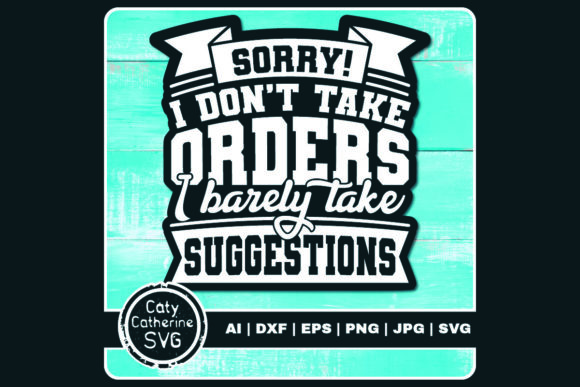
When I first pulled up the file, the immediate takeaway was its typographic confidence. The phrase "Sorry I Don t Take Orders I Barely Take Suggestions" is a mouthful, yet the layout manages to feel balanced rather than cluttered. In the world of Crafts and Graphics, text-heavy designs often fail because they ignore the limitations of thread. However, this design seems to rely on clean lines and distinct letter spacing, which is crucial for embroidery. The mood it creates is perfect for modern boutique branding or personalized gifts for the strong-willed individuals in our lives. It feels less like a generic slogan and more like a statement piece that belongs on a well-loved tote bag or a cozy sweatshirt.
The visual personality here is bold. It does not whisper; it declares. For an embroidery project, this means we need to ensure the font weight is substantial enough to hold up under satin stitch or fill stitch applications. If the letters are too thin, they risk breaking apart during washing or looking spindly on textured fabrics. My initial assessment suggests that with the right digitizing adjustments, this could be a standout piece for custom apparel.
Real-World Application: The Boutique Tote Scenario
To truly test the viability of this design, I imagined a specific real-life scenario: creating a run of custom tote bags for a local craft fair. These bags are made of heavy canvas, a fabric that can be tricky due to its weave. The goal was to produce a handmade product that appeals to young entrepreneurs and creatives who resonate with the "no orders, just suggestions" attitude.
In this context, the Don t Take Orders Barely Take Suggestion design shines as a conversation starter. Placed centrally on the front of a natural-colored canvas tote, the text becomes the focal point. I envisioned using a high-contrast thread color, perhaps a deep charcoal or navy against the beige fabric, to maximize legibility. The design fits naturally into the category of small shop product merchandise because it speaks directly to a niche audience. Unlike generic floral patterns, this quote sells a lifestyle. Customers at a craft fair are likely to stop and smile, recognizing the humor and independence in the message. It transforms a simple bag into a personalized gift or a badge of honor for the buyer.
Beyond tote bags, this design is equally compelling for sweatshirt embroidery. Imagine a oversized, heather-grey crewneck with this phrase stitched across the chest in white thread. The casual nature of the quote pairs perfectly with the relaxed fit of modern streetwear. It also works well for embroidered patch creation, where the design could be densely stitched on twill and then applied to denim jackets or caps, adding a layer of durability and style.
Technical Considerations for Stitching
While the concept is strong, the technical execution requires careful planning. Since the original file is provided as a SVG File and Transparent PNG, it is essential to remember that these are vector and raster graphics, not native embroidery files. Before stitching, a professional digitizer must convert this into a proper embroidery file compatible with your machine. This step is non-negotiable. You cannot simply load an SVG into most home embroidery machines without conversion software.
Once digitized, attention must be paid to stitch density. Long sentences can become dense blocks of thread if not managed correctly, leading to puckering, especially on stretchy fabrics like t-shirts or baby clothes. For a project like this, I recommend using a cut-away stabilizer rather than tear-away, particularly if the final product will undergo frequent washing. This ensures the text remains crisp and the fabric does not distort over time.
There are specific situations where this design should be used with caution. On dark fabric, you must ensure the thread colors have enough opacity and contrast; otherwise, the background might show through the stitches, muddying the message. Similarly, on curved surfaces like caps, the length of the sentence might require arching or splitting into two lines to maintain readability. Tiny lettering is another risk factor; if the design is scaled down too small for a pocket logo or a baby onesie, the intricate parts of the letters may merge. Always test the design on scrap fabric first to verify that the smallest details remain distinct.
Enhancing Brand Value and Customer Trust
For Etsy sellers and creative entrepreneurs, the choice of design directly impacts brand perception. Using a well-executed version of Don t Take Orders Barely Take Suggestion signals that your brand understands its audience. It shows a level of wit and relatability that generic stock images lack. When a customer receives a finished product with clear, professional stitching and a relevant message, it builds trust. They see that care was taken in both the selection of the design assets and the physical production.
This design also offers excellent potential for printable mockup creation. Before committing to thread and fabric, you can place the PNG version onto digital templates to visualize how it looks on different colored garments. This helps in creating compelling listings for commercial embroidery projects, allowing buyers to see exactly what they are purchasing. The visual appeal of the text, when rendered correctly, enhances the perceived value of the item, justifying a higher price point for custom work.
Practical Notes for the Maker
If you plan to incorporate this design into your workflow, keep these practical tips in mind:
- Verify Licensing: Although the design is available as a graphic, always confirm the licensing terms with the creator, Caty Catherine, before selling finished items or digital products derived from it.
- Check Thread Contrast: Test your chosen thread colors against the fabric background. High contrast is key for text-heavy designs.
- Review Stitch Direction: Ensure the digitized file uses appropriate stitch angles (satin vs. fill) to prevent light reflection issues that can make text hard to read.
- Confirm Hoop Size: Measure the design dimensions to ensure it fits within your available hoop size without needing excessive re-hooping.
- Fabric Texture Matters: Avoid using this detailed text on highly textured fabrics like looped towels unless you use a topping to stabilize the stitches.
In conclusion, the Don t Take Orders Barely Take Suggestion design holds significant promise for those willing to invest the time in proper digitizing and material selection. It bridges the gap between a funny quote and a stylish custom apparel statement. Whether you are making holiday gifts, expanding your boutique inventory, or just enjoying a hobbyist project, this design offers a fresh, human touch that resonates with today's makers and buyers alike.