Homeschool Takes a Village and Vineyard: A Designer's Review
As someone who spends more time staring at stitch maps than most people spend looking at their phones, I approach every new machine embroidery design with a mix of excitement and skepticism. We have all been there: you download a cute file, load it onto your machine, and halfway through the run, you realize the lettering is too tight or the density is going to turn your fabric into cardboard. That is why I was particularly interested in putting Homeschool Takes a Village and Vineyard through its paces. This isn't just another SVG cut file; for us in the stitching community, it represents a potential best-seller for the right client if the execution is handled correctly.
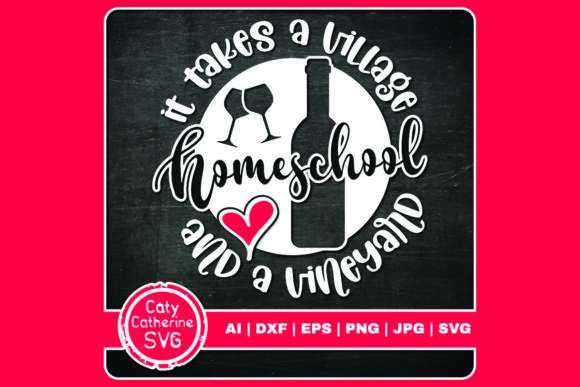
The first thing that strikes me about this piece, designed by Caty Catherine, is the mood. It perfectly captures that specific blend of exhaustion and humor that defines the modern homeschooling parent. The juxtaposition of "village" support with the very real need for a "vineyard" escape creates an instant connection. Visually, the layout feels balanced, but as a designer, my eyes immediately go to the typography. In the world of Graphics and Crafts, text-heavy designs are notoriously tricky to translate from a crisp vector line into actual thread. The curves of the letters need to hold up under the tension of the needle without losing their personality.
Real-World Application: The Boutique Tote Scenario
To truly evaluate this design, I imagined a specific real-life scenario. Picture a local boutique owner who specializes in gifts for teachers and parents. She wants to launch a line of heavy-canvas tote bags for the upcoming school year. She needs something that says "I am a homeschool mom" without being overly preachy or boring. This is where Homeschool Takes a Village and Vineyard shines.
If I were stitching this onto a natural cotton canvas tote, the rustic charm of the quote pairs beautifully with the texture of the fabric. However, the success of this embroidery project hinges on the translation from the provided SVG and PNG formats into a usable embroidery file. Since the product description lists SVG and Transparent PNG, we are likely looking at a design intended for cutting machines or print-to-cut workflows. For those of us doing pure machine embroidery, this means we might be using the graphic as a reference to create our own digitized version, or perhaps applying it as an appliqué.
If used as an applique design, the potential is huge. Imagine the "Vineyard" portion rendered in a rich merlot satin stitch against a cream background, with the "Village" text in a complementary navy or forest green. The visual appeal here is high because it tells a story. For an Etsy seller, this kind of narrative-driven handmade product commands a higher price point than a generic "Home School" monogram. It builds customer trust because it shows the maker understands the lifestyle of the buyer.
Technical Considerations for Stitching
Let's get into the nitty-gritty of production. If you are planning to use this concept for custom apparel like sweatshirts or caps, you need to be hyper-aware of stitch density. The phrase is somewhat long. On a standard 4x4 hoop, fitting this entire sentence legibly requires careful manipulation of the font size. If the lettering gets too small, those tiny details will vanish into the fabric texture, especially on looped materials like French terry or fleece commonly used for sweatshirt embroidery.
For baby embroidery projects, such as a onesie or a burp cloth, I would advise caution. The intricate nature of a "village" and "vineyard" theme might be too busy for a small garment. Instead, this design finds its true home on larger surfaces like tote bag designs, kitchen towels, or even a decorative pillow cover for the living room. When working on textured fabrics like waffle weave towels, a fill stitch might sink in too much. In those cases, relying on a bold satin stitch outline or converting the design into a patch application could save the day.
One critical factor is the background color. This quote screams for contrast. Stitching light thread on a dark garment can look stunning, but it requires a high-density underlay to prevent the fabric from peeking through. Conversely, dark thread on light fabric highlights every imperfection in the stitch density. Before committing to a full production run for a craft business, you must test the design on scrap fabric that matches your final product. Check how the threads behave on stretchy knits versus rigid canvases.
Commercial Viability and Brand Consistency
From a business perspective, Homeschool Takes a Village and Vineyard has strong legs for commercial embroidery. It fits perfectly into the "giftability" niche. Parents are always looking for items that validate their hard work with a touch of humor. Whether it is a holiday embroidery gift for Christmas or a back-to-school treat, the emotional resonance is there.
However, professionalism is key. If you are selling this as a small shop product, the finish must be flawless. Loose threads or puckering around the text will kill your reputation instantly. Ensure you are using the correct stabilizer for your fabric type. For hats or curved surfaces, a stiff cap frame and heavy-duty stabilizer are non-negotiable to keep the text from warping.
It is also vital to address the licensing aspect. The source material comes as an SVG and PNG. If you are digitizing this yourself for machine embroidery, ensure you have the rights to create derivative works for commercial sale. Many digital embroidery file creators have strict rules about reselling the stitched output versus the digital asset itself. Always confirm licensing before listing finished items on your online store. You do not want to build a brand on a design you aren't authorized to monetize.
Final Verdict for Makers
In conclusion, Homeschool Takes a Village and Vineyard is a winner in terms of concept and market appeal. It speaks directly to a passionate community. As a physical embroidery piece, its success depends entirely on your technical execution. Pay attention to your hoop size limitations, choose your thread colors wisely to maximize contrast, and never skip the test stitch.
Whether you are creating a personalized gift for a friend or stocking inventory for a boutique, this design offers a fantastic opportunity to showcase your skills. Just remember, the difference between a good product and a great one often lies in the details—literally, in the stitches. Treat the design with respect, adapt it thoughtfully to your medium, and you will have a finished product that customers will love to show off in their own village.