Who Need Santa? A Designer’s Take on This Aunty Design
As an embroidery designer who has spent years digitizing files and testing them on everything from stiff canvas to flimsy rayon, I have learned that a design’s success isn’t just about how it looks on a screen. It is about how it behaves under the needle. When I first pulled up the Who Need Santa when You Have Aunty file, my initial reaction was one of appreciation for its attitude. In a market saturated with generic holiday motifs, this piece stands out because it taps into a specific, warm, and humorous family dynamic. It is not just a Christmas graphic; it is a statement piece for the matriarchs, the cool relatives, and the beloved aunts who often do the heavy lifting during the holidays.
From a technical standpoint, evaluating a machine embroidery design like this requires looking past the cute slogan. I need to know if the lettering will hold up after washing, if the density is appropriate for common fabrics, and where it fits best in a product line. Having reviewed countless digital embroidery files, I can tell you that text-heavy designs are tricky. They require precise spacing and clean fonts to remain legible. This particular design appears to balance whimsy with readability, making it a strong candidate for various embroidery projects.
The Real-World Test: Stitching for a Holiday Gift
To truly understand the value of this asset, I imagined a real-life scenario. Let’s say you are a small business owner or an Etsy seller preparing a batch of custom gifts. You decide to create a premium tote bag design for a client who wants something unique for her sister, the "fun aunt" of the family. You choose a heavy-weight cotton canvas, which is forgiving and provides a stable base for stitching.
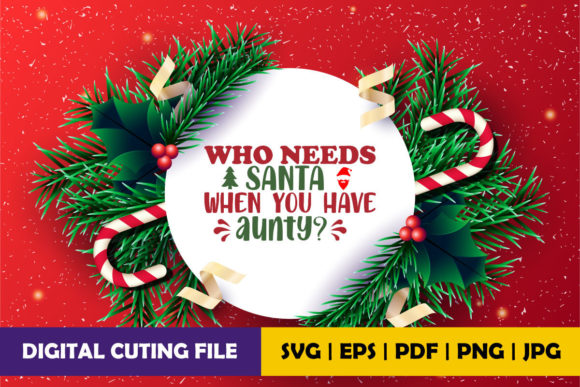
When hooping the fabric, the first thing I look for is balance. The phrase Who Need Santa when You Have Aunty suggests a layout that likely centers around bold typography, possibly accompanied by subtle decorative elements. In my mental simulation of the stitching process, I consider the stitch density. If the design uses too much fill stitch in the letters, it could cause puckering on lighter fabrics. However, if it utilizes a combination of satin stitch for outlines and lighter fills or running stitch details, it will lay flat and look professional. For a tote bag, this durability is key. The recipient will use this bag year after year, and the embroidery needs to withstand that wear.
The mood this design creates is playful yet affectionate. It moves away from the traditional red-and-green overload and focuses on personality. This makes it incredibly versatile. It is not just for December 25th; it is for any occasion where an aunt is being celebrated. This longevity increases the perceived value of your handmade product. Customers are more likely to buy something they can use beyond a single holiday season.
Material Considerations and Fabric Texture
One of the most critical aspects of using any embroidery file is understanding how it interacts with fabric texture. This design, with its likely emphasis on text, performs best on smooth, tightly woven materials. Think polo shirts, high-quality sweatshirts, or structured aprons. On these surfaces, the edges of the letters will remain crisp.
However, caution is needed when applying this to textured fabrics like terry cloth towels or fuzzy fleece. The small details might get lost in the pile. If you are creating a kitchen towel or a cozy blanket, you must ensure the font size is large enough to remain legible. Additionally, when working with stretchy fabrics for custom apparel like t-shirts, using the correct stabilizer is non-negotiable. A cut-away stabilizer is usually my go-to for garments that will be washed frequently, ensuring the design does not distort over time.
Dark fabrics present another challenge. If you are stitching this on a navy or black sweatshirt embroidery project, you need high-contrast thread colors. White, gold, or bright red threads will pop, but you must check your digitizing to ensure there are no stray stitches or underlay showing through. I always recommend running a test stitch-out on scrap fabric of the same type before committing to the final finished product. This simple step saves time, money, and reputation.
Commercial Viability for Craft Businesses
For craft business owners, the commercial potential of Who Need Santa when You Have Aunty is significant. It fits perfectly into the niche of personalized family gifts. Beyond tote bags and sweatshirts, consider using this design for:
- Embroidered patches: Create iron-on or sew-on patches that customers can add to jackets or backpacks. This allows for easy inventory management since you can pre-make the patches.
- Caps and hats: Text-based designs work well on the front panel of caps, provided the height fits within the standard hoop size. Check the dimensions carefully to avoid hitting the seams.
- Pillow covers: A festive pillow with this message adds a touch of humor to holiday decor. Use a heavier thread or a double pass if the fabric is thick.
- Baby items: While the text says "Aunty," it is often the aunt who buys the baby clothes. A onesie with this message is a hit at baby showers, especially if the aunt is the guest of honor.
When listing these items on platforms like Etsy, use keywords like holiday embroidery, personalized gift, and commercial embroidery to attract the right buyers. High-quality printable mockup images are essential here. Show the design on different products to help customers visualize the end result. A good mockup can bridge the gap between a digital file and a tangible desire.
Technical Notes for Designers
Before you load this design assets into your machine, take a moment to review the technical specifications. Since the product description mentions it is a digital file from a graphic store, verify the available formats. Ensure you have the version compatible with your specific embroidery machine software. Common formats include PES, DST, JEF, and EXP, but this varies by manufacturer.
Check the recommended hoop size. If the design is large, you may need a 5x7 or 6x10 hoop. Trying to squeeze a large design into a 4x4 hoop will result in cropping or scaling issues that ruin the proportion. Also, inspect the color sequence. Does the design require frequent thread changes? If so, plan your workflow to minimize downtime. Grouping similar colors together can speed up production, which is vital for small shop products during the busy holiday rush.
Licensing is another crucial factor. The description indicates these are amazing graphic design digital files for personal and supportive uses. However, if you intend to sell finished items, you must confirm the license terms. Most designers offer commercial licenses for an additional fee or as part of a bundle. Never assume a file is free for commercial use unless explicitly stated. Protecting your small shop product line legally is just as important as the quality of the stitching.
Final Verdict on Visual Appeal and Branding
The strength of Who Need Santa when You Have Aunty lies in its emotional connection. It is not just a pattern; it is a conversation starter. When a customer sees this on a baby embroidery item or a stylish apron, they smile. That emotional response drives sales. It builds brand consistency for sellers who focus on family-centric, humorous, or heartfelt designs.
In terms of visual appeal, the design likely offers a clean, modern aesthetic that avoids clutter. This simplicity is a virtue in embroidery, where less is often more. Complex, overly dense designs can look messy and feel stiff. A well-digitized text design breathes better and drapes better on clothing. It enhances the buyer engagement because it feels premium and thoughtful.
Ultimately, this design is a solid addition to any Crafts or Graphics library for the serious maker. It offers versatility across multiple product types, from appliqué design variations to straightforward satin-stitched text. By paying attention to fabric choice, stabilizer selection, and proper hooping, you can turn this digital file into a best-selling embroidered patch or garment. It is a reminder that in the world of handmade goods, personality sells just as well as perfection. So, hoop it up, test your tension, and let this design bring a little extra joy to your next project.