I Love You a Ton Elephant and Baby: A Designer's Review
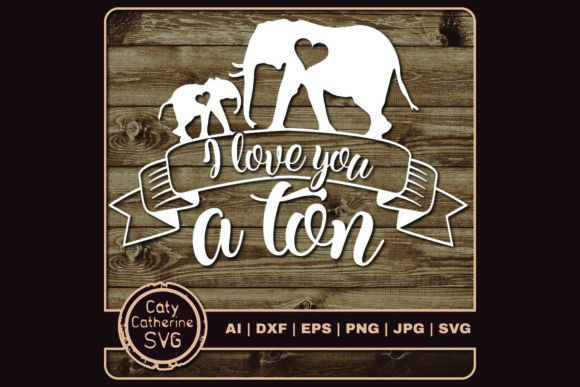
When I first pulled up the I Love You a Ton Elephant and Baby file on my screen, my immediate reaction wasn't just about the cuteness factor, though it is undeniably high. As someone who spends hours digitizing and stitching for clients, my first thought was always about translation: how will this vector art actually behave when converted into thread? The design, created by Caty Catherine, presents a classic nursery theme with a modern, clean silhouette. It features a large elephant and a smaller baby elephant, likely interacting in a way that suggests protection and affection, paired with the heartfelt quote "I Love You a Ton." For those of us in the Crafts and Graphics space, finding a balance between sentimental value and technical stitchability is the holy grail, and this piece seems to hit a sweet spot for specific applications.
First Impressions and Visual Personality
The layout of this design feels intentional. In the world of machine embroidery design, whitespace is just as important as the stitches themselves. The separation between the text and the elephant figures appears generous enough to prevent thread crowding, a common issue in smaller hoop projects. The mood is soft, nurturing, and universally appealing, making it a strong candidate for baby embroidery projects. However, from a technical standpoint, the curves of the elephants are what catch my eye. Smooth curves in a digital embroidery file can sometimes turn into jagged stair-steps if the resolution isn't high or if the stitch density is too low. Assuming the source files (SVG, EPS, DXF) are clean, this design should digitize well into smooth satin columns or tight fill stitches, provided the underlying vector paths are optimized.
Real-World Application: The Custom Tote Bag Scenario
To truly evaluate this design, I imagined a real-life scenario: a customer order for a set of personalized tote bags for a baby shower. The client wants something durable but sweet. Using I Love You a Ton Elephant and Baby on a canvas tote is a logical choice. Canvas provides a stable base, reducing the risk of fabric distortion during stitching. In this context, the design acts as a focal point. If I were running this as a commercial embroidery job, I would likely opt for a fill stitch for the elephant bodies to give them weight and presence against the textured fabric. The text, "I Love You a Ton," would need careful attention. If the font is too thin, it might get lost on a rough weave. I would recommend testing a slightly bolder thread weight or ensuring the digitized version uses a sufficient number of runs to cover the fabric texture completely.
This same logic applies to sweatshirt embroidery. A fleece or French terry fabric adds loft, which can swallow up fine details. Here, the simplicity of the elephant shapes works in our favor. Unlike complex mandalas or intricate landscapes, this design relies on recognizable silhouettes. Even if the stitch count is moderate, the message remains clear. For a personalized gift, this reliability is crucial. You don't want a recipient squinting at a blob of thread; you want them to immediately feel the warmth of the message.
Navigating Fabric Challenges and Hoop Constraints
While the design is versatile, there are areas where caution is required. If you plan to use this on stretchy fabrics like jersey knits for custom apparel, the stability of the design becomes paramount. The interaction between the two elephants creates a specific width that must fit within your available hoop size. Before committing to a final product, always measure the design dimensions against your hoop capabilities. If the design is too wide for a standard 4x4 hoop, you might be forced to resize it, potentially compromising the legibility of the text.
Furthermore, consider the stitch density. If the elephants are intended to be solid blocks of color, high-density fill stitches can cause puckering on lightweight materials. For a tea towel or a thin cotton onesie, I would strongly advise using a high-quality cutaway stabilizer rather than tear-away. The weight of the thread in a design like this needs support to maintain its shape after washing. Also, pay close attention to the corners of the text. Sharp angles in lettering can sometimes result in thread bunching if the trim points aren't managed correctly during the digitizing phase. Since this is sold primarily as a cut file format (SVG, PNG, etc.), remember that you are responsible for the digitizing process or hiring a professional to convert it into a stitch file compatible with your machine.
Enhancing Product Value and Brand Consistency
For Etsy sellers and owners of a small shop product line, consistency is key to building trust. Using a cohesive design like I Love You a Ton Elephant and Baby across different items—perhaps a matching set of a pillow cover and a burp cloth—creates a curated look that elevates perceived value. The visual appeal of the design lies in its emotional resonance. It's not just an image; it's a statement. When customers see a well-executed version of this on a finished product, it reinforces the idea of quality and care. This is particularly important for holiday embroidery or gift seasons where buyers are looking for meaningful items rather than generic decor.
If you are selling digital embroidery file assets or printable mockup previews, ensure your presentation highlights the versatility of the design. Show it on dark fabric with light thread to demonstrate contrast, and on light fabric with pastel threads to show softness. This helps potential buyers visualize the end result. However, always be transparent about licensing. Since this is a design asset, confirm whether your intended use falls under personal or commercial guidelines before listing finished goods.
Practical Notes for the Studio
Before you start stitching on your final inventory, take these practical steps:
- Test on Scrap Fabric: Always run a test stitch-out on the exact same fabric type and weight you intend to use for the final product. This reveals issues with tension and registration.
- Check Thread Contrast: Ensure your chosen thread colors stand out against the background. A grey elephant on a navy sweatshirt might look muddy without proper lighting or contrast.
- Review Small Details: Inspect the tiny spaces between the elephant legs and the text. These areas are prone to thread breaks or bird-nesting if the digitizing is too tight.
- Verify Licensing: Double-check the terms provided by the designer, Caty Catherine, regarding the sale of finished physical items versus digital redistribution.
- Consider Applique: For larger versions on blankets or wall hangings, consider converting this into an applique design. This reduces stitch count, adds texture, and can make the design pop more effectively on large surfaces.
In conclusion, I Love You a Ton Elephant and Baby is a charming addition to any designer's library. Its strength lies in its emotional clarity and adaptable composition. Whether you are creating a one-off personalized gift for a friend or building a collection of nursery decor for your boutique, this design offers a solid foundation. Just remember that the magic happens in the execution. With the right stabilizer, thoughtful thread choices, and a respect for the fabric you are working on, this design can transform simple materials into cherished keepsakes. It is a reminder that in our craft, the technical precision we apply is what allows the sentiment to shine through.