Review: Tonight We Fly Halloween SVG for Embroidery
As a designer who spends more time staring at stitch simulations than I do sleeping, I have learned to be skeptical of digital files marketed broadly as "SVGs for Cricut." While these formats are excellent for vinyl cutting and sublimation, translating them into a high-quality machine embroidery design requires a critical eye. I recently evaluated the Tonight We Fly Svg, Halloween Svg pack to determine its viability for real-world stitching projects. My goal was not just to see if it looked cute on a screen, but to assess how it would hold up on fabric, how it would behave under the needle, and whether it offers genuine value to Etsy sellers and craft business owners looking to expand their holiday inventory.
First Impressions: Mood and Visual Personality
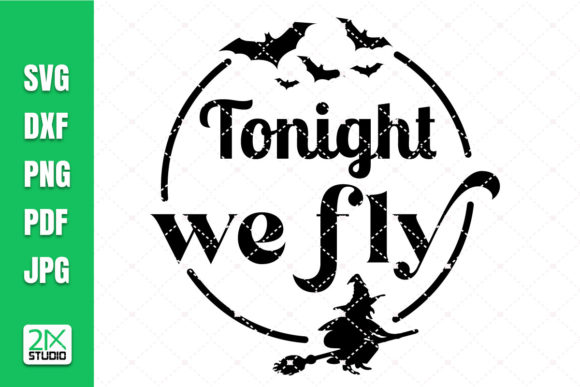
The phrase "Tonight We Fly" carries an immediate sense of whimsical rebellion, perfectly suited for the Halloween season. Visually, the design leans into the trendy, minimalist aesthetic that has dominated Crafts and Graphics markets in recent years. It is not overly cluttered with pumpkins or ghosts, which is a relief. Instead, it relies on strong typography and likely includes subtle witch-themed accents, such as a broomstick or a moon, depending on the specific variant in the bundle.
For an embroidery reviewer, the first thing I look for is balance. Does the text overpower the graphic elements? In this case, the layout appears designed for horizontal stability, making it ideal for chest placements on sweatshirts or centered designs on tote bags. The mood is playful yet chic, appealing to adults who want festive apparel that doesn’t scream "costume party." This versatility is crucial for small shop product lines, as it allows the item to be worn throughout October rather than just on the 31st.
Real-World Application: From Screen to Stitch
To test the practicality of this digital embroidery file, I imagined several common production scenarios. The most obvious application is sweatshirt embroidery. A heather grey or black crewneck provides the perfect canvas for this design. However, because the source files are described as SVG, PNG, and DXF for cutting machines, a serious embroiderer must convert or digitize this artwork properly. If you are using a pre-digitized version provided by the creator, you must check the stitch types.
For the text "Tonight We Fly," a clean satins stitch works best for legibility, provided the font size is large enough. If the letters are too thin, they may require a running stitch outline to prevent sinking into plush fabrics like fleece. For the graphical elements, such as a witch’s hat or broom, a combination of fill stitch and satin borders creates depth. I visualized this design on a canvas tote bag design, where the sturdy fabric supports higher stitch density without puckering. The contrast of white or metallic gold thread against dark canvas would make the piece pop, creating a high-perceived value handmade product.
Another viable option is baby embroidery on a onesie or bib. Here, caution is key. The design must be scaled down significantly. If the original SVG has intricate details, they may become lost or create bulky stitch clusters that are uncomfortable for a baby’s skin. In this context, simplifying the design to just the text or a single iconic symbol might be necessary to maintain comfort and durability.
Technical Considerations and Fabric Compatibility
Working with Halloween-themed designs often means dealing with dark fabrics—blacks, deep purples, and oranges. When stitching light-colored threads on dark fabric texture backgrounds, underlying stitches can show through if the digitizing is poor. I recommend using a color-matched underlay or a stabilizer that matches the top thread color to ensure crisp edges. This is particularly important for the embroidered patch market, where clean backings and front-facing clarity are non-negotiable for professional results.
Curved surfaces present another challenge. If you plan to put this design on a cap, the "Tonight We Fly" text must be arched correctly in your digitizing software. Straight text on a curved cap brim or crown will distort visually. Additionally, caps have limited hoop size areas. You must ensure the design fits within a standard 5x7 or 4x4 hoop without encroaching on seams. For stretchy fabrics like jersey t-shirts, a cut-away stabilizer is essential to prevent the design from warping after washing.
It is also vital to address the file format discrepancy. The product description mentions SVG, PNG, and DXF files for Cricut. These are vector and raster image files, not native embroidery machine files (like PES, DST, or JEF). Unless the seller explicitly provides an embroidered-ready file, you will need to use digitizing software to convert these graphics. This step is critical. Auto-digitizing an SVG often results in inefficient stitch paths, excessive jump stitches, and poor coverage. For a professional commercial embroidery outcome, manual digitizing or careful editing of auto-digitized files is required to adjust pull compensation and stitch angles.
Enhancing Product Value and Brand Consistency
Why choose this specific design? In a saturated market, personalized gift buyers look for uniqueness. The "Tonight We Fly" quote offers a narrative element that generic jack-o'-lanterns lack. It suggests a story, a group activity, or a personal mantra. For apparel decorators, this translates to higher engagement. Customers are more likely to share photos of unique, witty designs on social media, providing organic marketing for your small business merchandise.
Furthermore, using a cohesive design language helps build brand trust. If your shop specializes in modern, minimalist holiday decor, this design fits seamlessly. It avoids the chaotic, clip-art aesthetic that can cheapen a brand. By pairing this embroidery with high-quality blanks and thoughtful packaging, you elevate the perceived value of the finished product. It becomes not just a shirt, but a boutique item.
Practical Designer Notes for Execution
Before launching this design into your production line, follow these steps to ensure quality:
- Test on Scrap Fabric: Always stitch out a sample on the exact fabric type you intend to sell. Check for puckering, thread breaks, and registration issues.
- Check Thread Contrast: Verify that your chosen thread colors stand out against the fabric. Use a black-and-white mockup to test value contrast if you are unsure.
- Review Stitch Density: Ensure the design isn’t too dense for lightweight fabrics, which can cause tearing, or too sparse for heavy fabrics, which can look amateurish.
- Confirm Licensing: Since this is a digital asset, carefully read the license terms. Can you use it for commercial embroidery? Are there limits on the number of physical items you can sell? Never assume; always verify.
- Inspect Small Details: Zoom in on the digital file. Are there tiny gaps or overlapping lines that could cause stitching errors? Clean up the vectors before digitizing.
In conclusion, the Tonight We Fly Svg, Halloween Svg offers a strong foundation for festive embroidery projects. Its strength lies in its modern, versatile aesthetic. However, its success depends entirely on the technical execution. By treating the SVG as a starting point for careful digitizing and respecting the limitations of different fabrics and hoops, you can create stunning, profitable pieces. Whether for a holiday embroidery collection or a year-round witchy vibe, this design has the potential to be a standout seller if handled with professional care.